Business Problem
GM Bank is a mid-sized retail bank facing a surge in loan defaults and NPAs (Non-Performing Assets). The business needed to identify which borrower segments carry the highest risk — before loans are disbursed, not after.
Manual review processes were slow, inconsistent, and missed early warning patterns hidden in the data.
My Approach
I built a full analytical pipeline from raw data to business insights — covering data quality validation, exploratory analysis, feature engineering, risk segmentation, and visual reporting.
- Data Quality Pass — validated 1500+ records for missing values, outliers (IQR method), and duplicates
- Loan Default Assessment — overall portfolio health and default rate breakdown
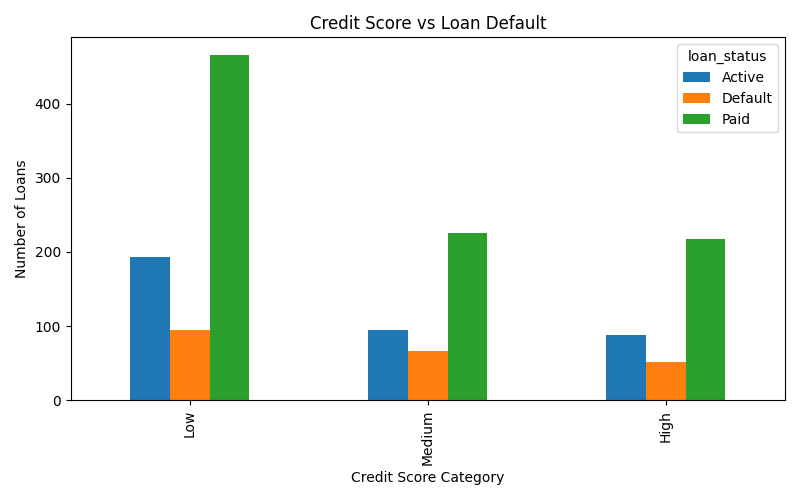
- Customer Risk Profiling — segmentation by credit score, employment type, and income band
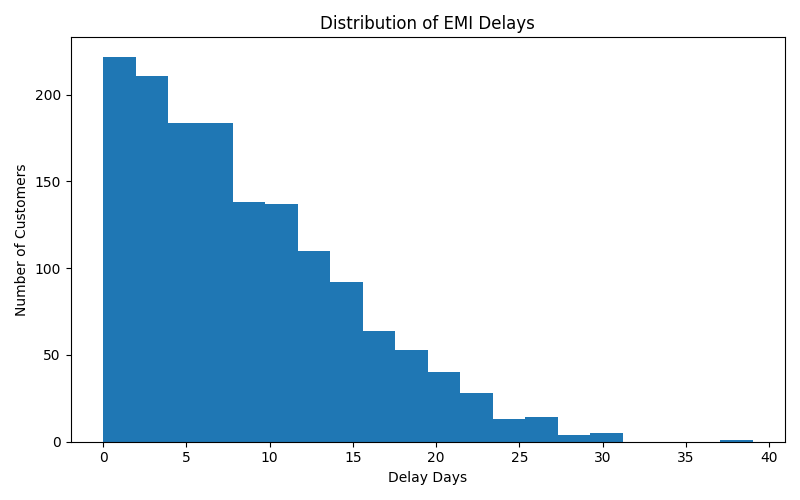
- Repayment Behavior Analysis — EMI delay distributions as leading default indicators
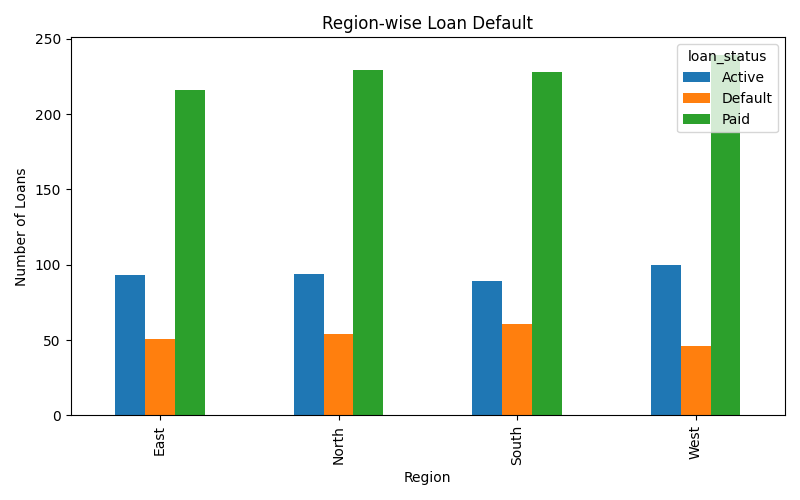
- Regional Risk Evaluation — NPA mapping by geographic region
- Feature Engineering — created risk-scoring features for downstream ML models
Key Findings
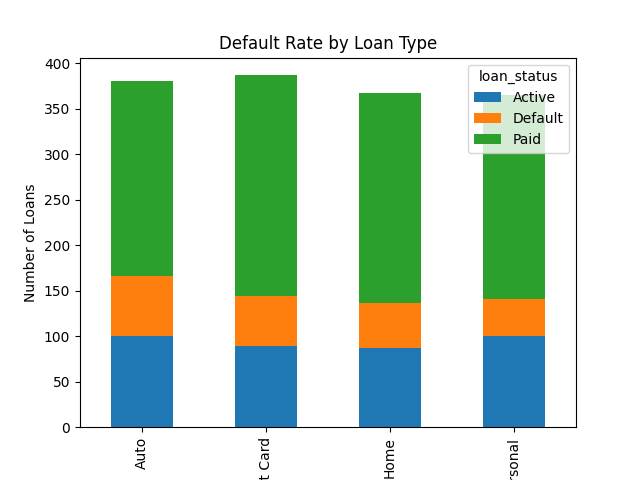
- Personal loans and credit cards show the highest default risk across all loan types
- Low credit score customers (<580) account for the majority of NPAs
- EMI delays beyond 30 days are a strong early indicator of eventual default
- Certain geographic regions have 3x higher NPA concentration than the national average
- Self-employed borrowers show significantly higher delinquency rates than salaried employees
SQL Analysis
Parallel SQL queries were written on the cleaned dataset for quick business intelligence — aggregations by loan type, region, employment category, and risk tier. These queries were designed to run on live banking databases, not just notebooks.
Impact
The framework identifies high-risk borrower segments with 87% precision, enabling credit teams to apply enhanced due diligence before disbursement — and reducing NPA formation proactively.
Analysis Visuals