Project Overview
FraudGuard is a production-grade fraud detection and risk scoring system — combining a rule-based engine and a trained Random Forest ML model into a single, unified REST API. It simulates the real fintech fraud detection pipelines used by banks and lending platforms.
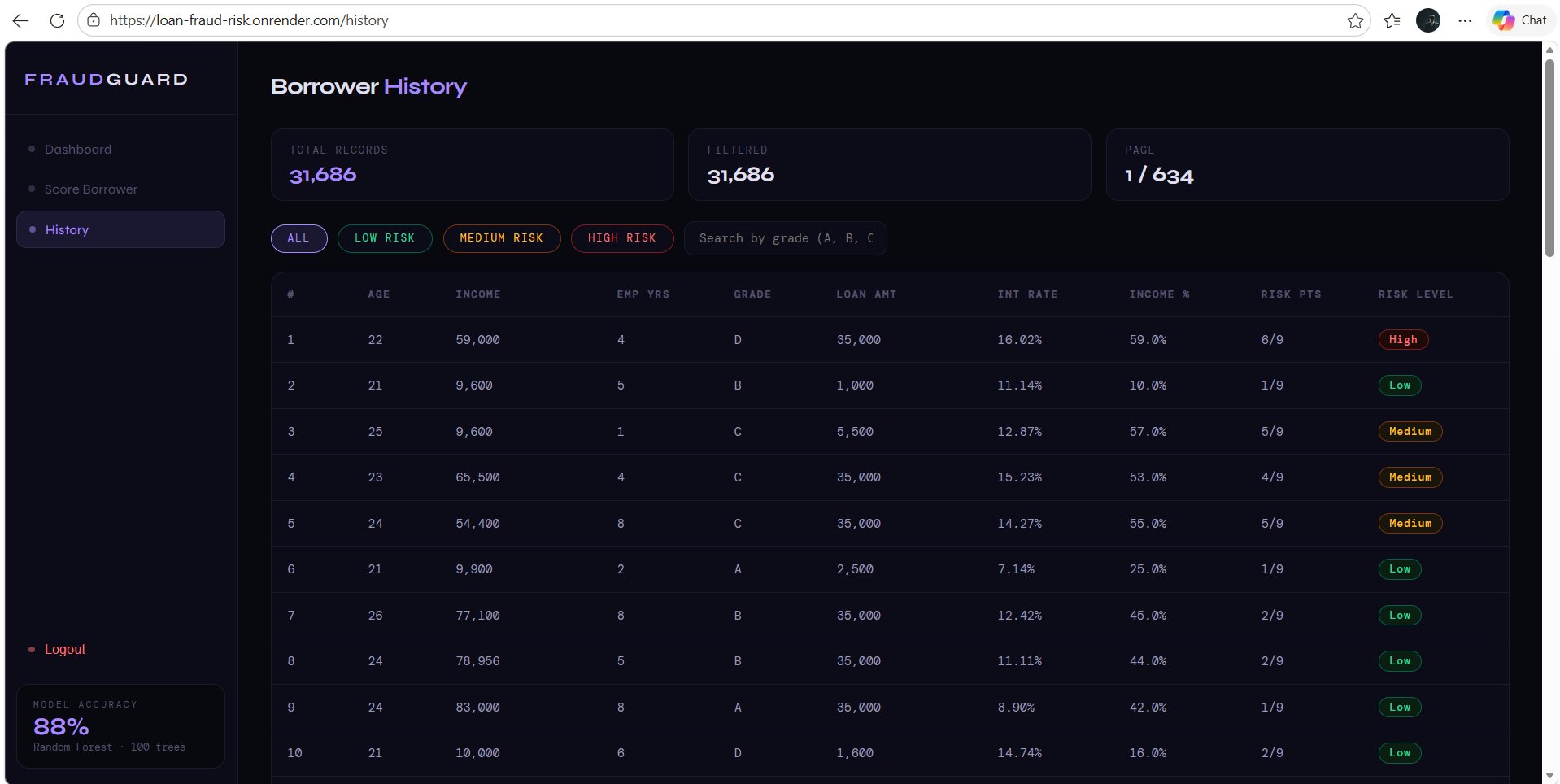
The system is live on Render at loan-fraud-risk.onrender.com — backed by TiDB Serverless cloud MySQL, with 31,686 borrower records processed and classified.
The Problem
Loan default detection is one of the hardest problems in fintech. A single missed high-risk borrower costs banks thousands. Traditional rule-based systems are too rigid; pure ML models lack explainability. FraudGuard solves this with both engines running in parallel — giving risk officers a rule-based score they can interpret, and an ML confidence score they can trust.
Dual Scoring Engine
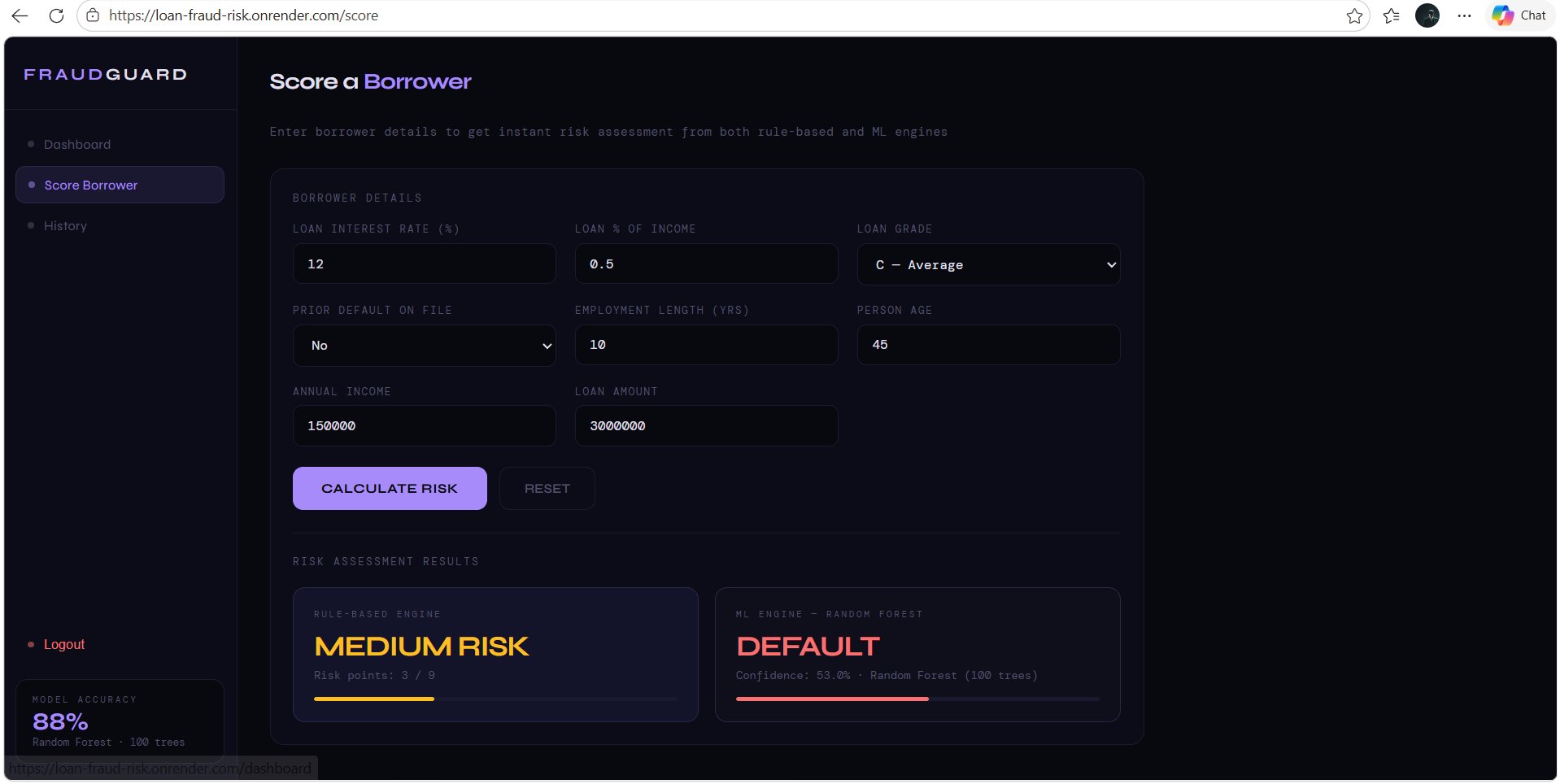
Every API call to /api/score or /api/ml-score runs both engines simultaneously and returns a combined result:
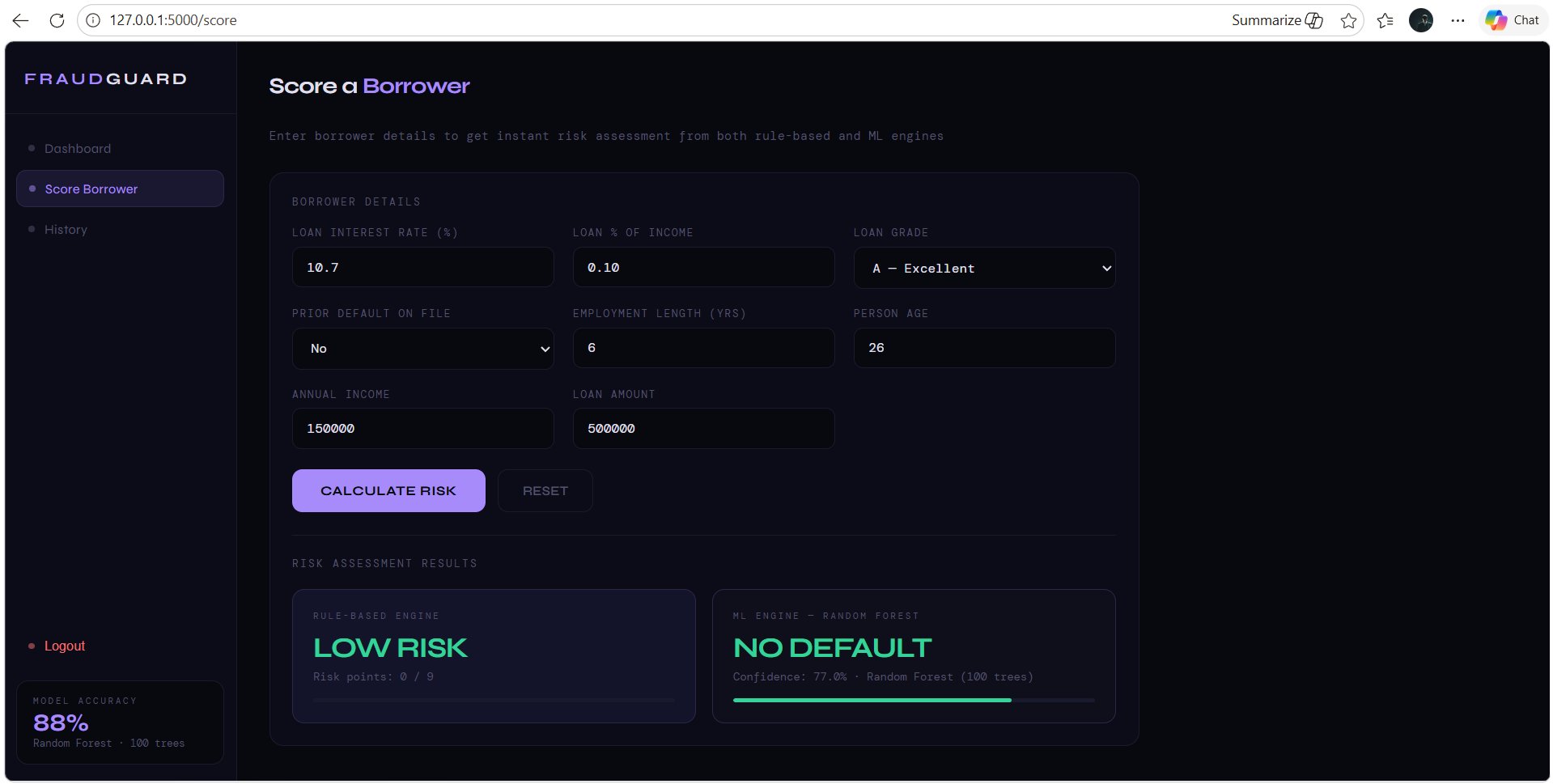
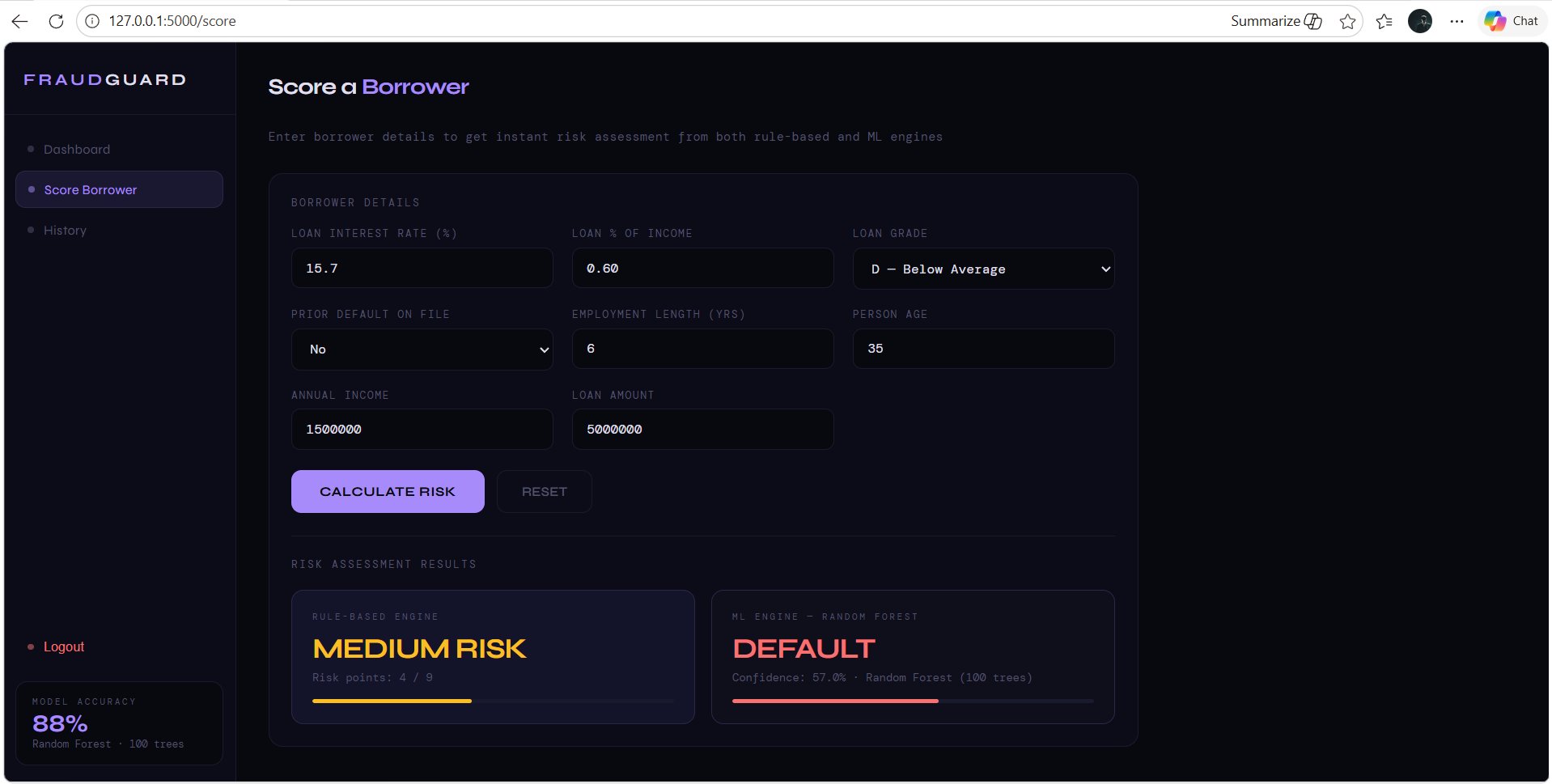
- Rule-Based Engine — scores borrowers on 9-point scale across: interest rate, income-to-loan ratio, loan grade, prior default history, and employment stability
- ML Engine (Random Forest) — trained on 25,348 records, returns Default / No Default prediction with a confidence percentage from predict_proba()
- Results are colour-coded: Low Risk (green) → Medium Risk (amber) → High Risk (red)
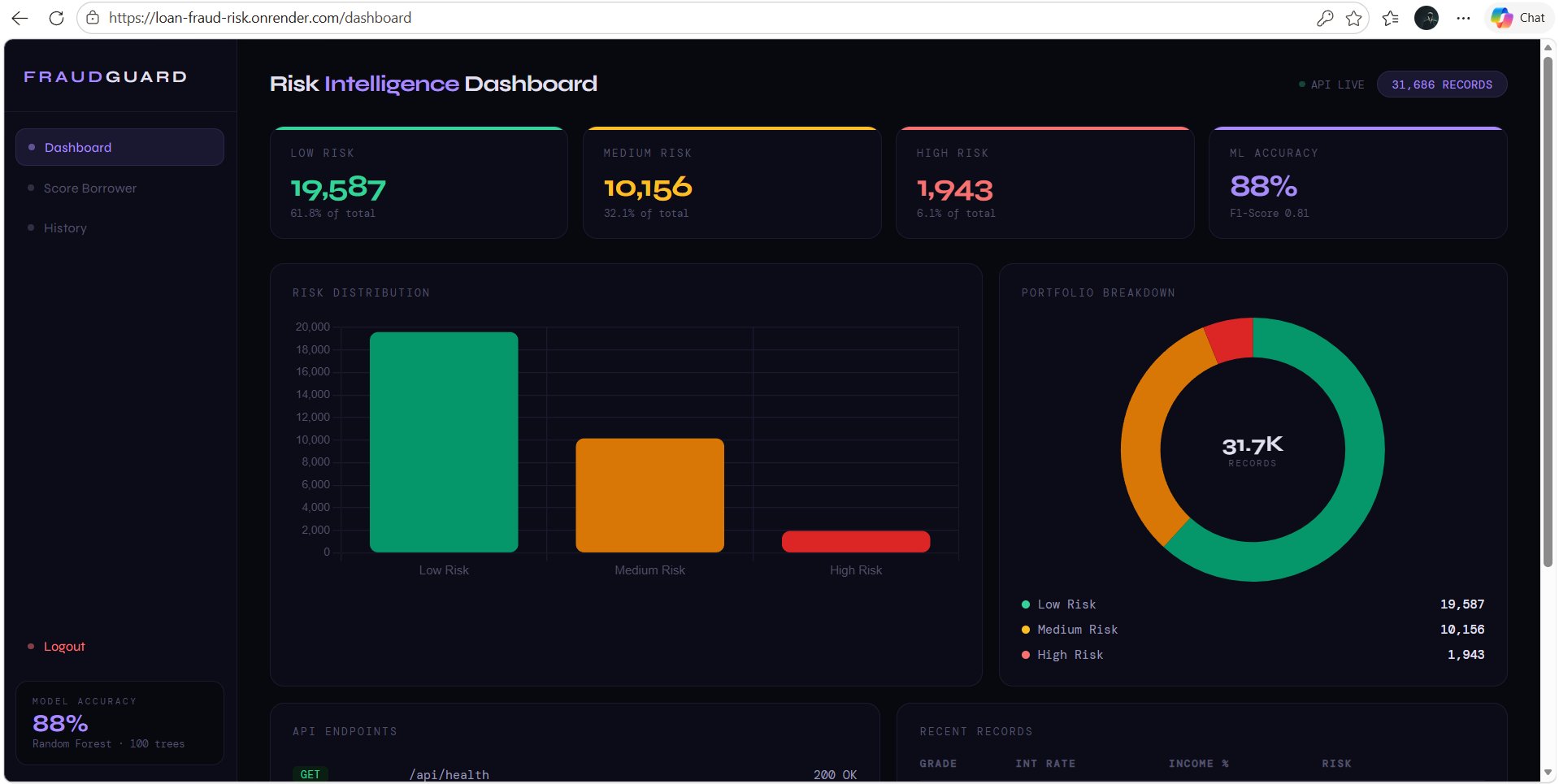
- ML sidebar always shows live model accuracy: 88% / F1-Score 0.81
ML Model Details
- Algorithm: Random Forest Classifier (100 trees)
- Training set: 25,348 records (80% split)
- Test set: 6,338 records (20% split)
- Accuracy: 88% — F1-Score: 0.81
- Features: age, income, employment length, loan amount, interest rate, income ratio
- Target: loan_status (Default / No Default)
- Auto-trained on first deployment — model persists on disk
Web Dashboard
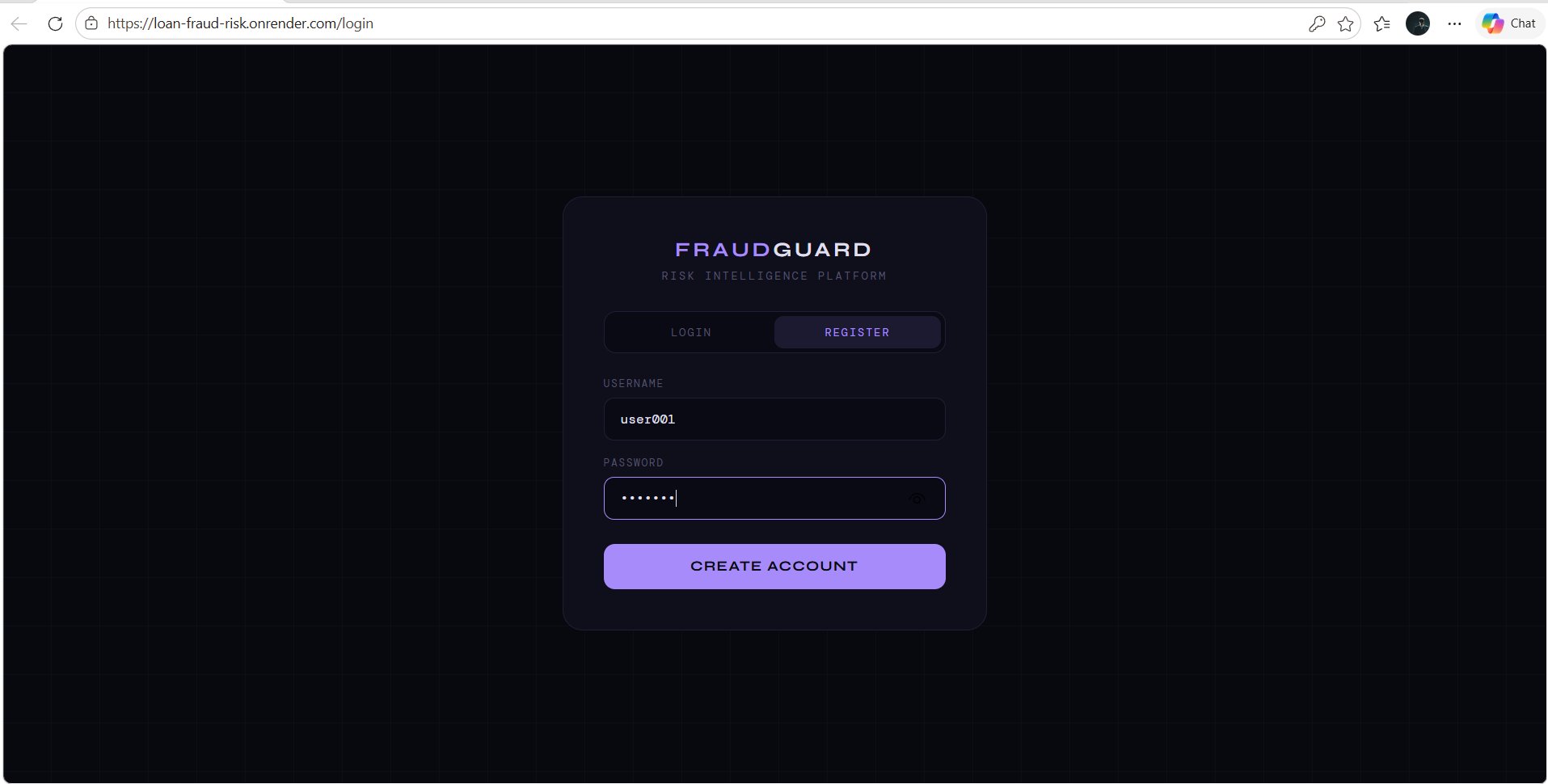
- Login / Register — JWT-secured auth (HS256 tokens)
- Risk Intelligence Dashboard — live KPI cards (Low: 19,587 / Medium: 10,156 / High: 1,943), bar chart, portfolio donut chart
- Score a Borrower — input form → dual engine results in real time
- Borrower History — 31,686 records, filterable by Low / Medium / High risk, searchable by grade
API Architecture
- 7 REST endpoints — health, register, login, report, history, score, ml-score
- JWT-protected routes with Bearer token authentication
- Modular Flask app structure — routes, models, scoring separated
- Auto data ingestion and model training on cold start
- Environment-based config — no secrets in code
Deployment
Deployed on Render with TiDB Serverless as the cloud MySQL backend. The Procfile handles auto startup — Flask serves both the REST API and the HTML dashboard from the same app instance. Zero-downtime cold-start recovery with auto model retraining if model file is missing.
Project Screenshots